
A 500 L rating does not tell you how many residents can shower during a Delhi hostel’s morning peak, nor how much backup energy the system will need in winter. You will be able to calculate the load, compare solar and heat-pump performance under the same conditions, and specify a system that delivers hot water when occupants actually need it.
Key takeaways
- Size from peak mixed-water demand, not the storage tank label.
- Compare winter solar output, heat-pump electricity use and backup requirements.
- Specify roof access, insulated pipes, safety valves and service clearances.
- Choose the plant with the lowest delivered hot-water cost and downtime risk.
Size the hostel system from peak bathing demand, not the tank label
A 200 LPD, 300 LPD or 500 LPD system is enough only after you calculate daily use and the busiest bathing period. Count occupants, multiply by realistic hot-water use per person, then add kitchen and laundry demand. For hostel showers, use measured litres of mixed water at 40–45°C rather than the tank’s nominal volume.
A practical sizing sequence is:
- Record occupied beds, not sanctioned capacity.
- Measure shower flow; a 6 L/min shower used for five minutes consumes 30 L.
- Estimate peak demand: occupants bathing in the busiest two-hour window × litres per person.
- Add 10–20% for washing, kitchen or laundry loads.
- Check recovery: available heating input during the gap before the next peak must replace the withdrawn volume.
| Rated capacity | Usually fits | Fails when |
|---|---|---|
| 200 LPD | Up to about 8–10 moderate users per day | Many residents bathe together |
| 300 LPD | About 12–15 moderate users | Morning demand exceeds storage and recovery |
| 500 LPD | About 20–25 moderate users | A larger hostel has a concentrated peak |
LPD is daily output, not simultaneous shower capacity. A 500 L tank heated from 30°C to 60°C stores about 17.4 kWh, and cold recovery can leave occupants waiting.
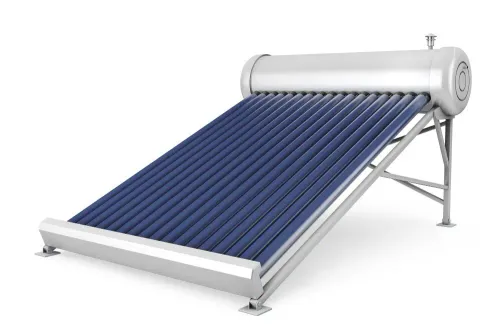
For a Racold 500 L solar water heater, verify whether 500 L means one tank or total system capacity, then request collector area, backup rating and recovery output.
Compare solar and heat pump performance across Delhi’s seasons
For a Delhi hostel, the solar versus heat pump for hostel decision changes with demand timing: solar cuts daytime heating cost, while a heat pump supplies controlled recovery after sunset and during cloudy weather.
| Option | Delhi seasonal performance | Better choice when |
|---|---|---|
| Solar thermal | Strongest in summer; output falls under winter haze, shorter days, dust and monsoon cloud. Morning peaks often trigger electric backup. | You have unshaded roof area, daytime collection and patience for cleaning, descaling and repairs. |
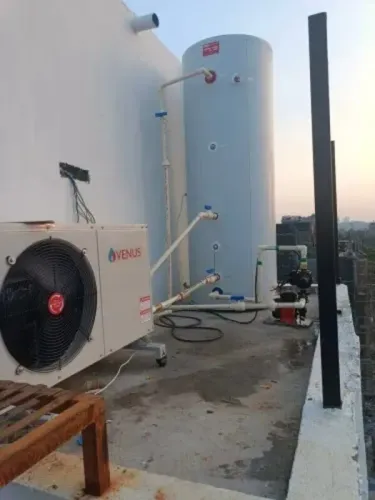
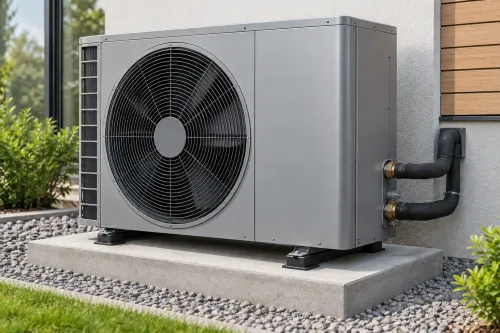
| Heat pump | Runs at night and in monsoon, but winter cold air reduces heating capacity and COP. Compare power input and capacity at the required leaving-water temperature and representative winter ambient. | You need predictable recovery, limited roof space or reliable overnight heating. |
| Hybrid | Solar preheats water; the heat pump covers night demand, winter shortfall and cloudy days. | Bathing is concentrated in the morning and uninterrupted service matters. |
Compare delivered heat cost, not purchase price. Include collector or tank replacement, backup electricity, circulation-pump power, roof work, water treatment, descaling, sacrificial anode replacement, leakage repairs and AMC response time. Hard or sediment-laden water can reduce heat transfer in both systems, so specify filtration, inlet-water limits, flushing and descaling intervals.
Choose solar alone only when backup capacity covers Delhi’s winter morning peak. Choose a heat pump when roof shade, scarce space or night demand makes solar unreliable. A hybrid usually gives the safest hostel operation, provided separate isolation valves let one system run while the other is serviced.
If you are comparing a racold solar or heat pump water heater hostel in delhi, request seasonal delivered-kilowatt-hour estimates, not an annual solar fraction alone.
Specify the roof, plant room, pipework and safety controls
Before either option serves several hostel bathrooms, provide a roof, plant room, insulated distribution network and controls that prevent one fault from stopping all hot water. For a hostel hot water system in delhi, inspect the roof’s shade, orientation, structural loading, dust exposure and maintenance access before choosing solar.
| Option | Roof and plant-room provision | Essential controls |
|---|---|---|
| Solar water heater | Unshaded collector field, safe access, short pipe route, storage tank, circulation pump and electric backup in a ventilated plant room | Solar differential controller, temperature sensors, isolation valves, drain points, pressure-temperature relief valve, expansion vessel and mixing valve |
| Heat pump | Outdoor airflow, service clearance, condensate drainage, low-noise location, insulated storage tank and correctly sized electrical supply | Flow and return gauges, non-return valves, isolation valves, backup-heater interlock, high-temperature cut-out, pressure relief and RCD protection |
Specify the distribution system as a complete installation, not merely a tank and heat source.
- Insulate hot-water flow and return pipes continuously, including valves and tank connections.
- Use a return loop only where bathrooms need rapid availability; control its pump with a timer or temperature sensor, balance branches, and show the return connection on the drawing.
- Install a thermostatic mixing valve at the outlet to limit scalding, while retaining a higher tank temperature for hygiene.
- Provide bypasses and separately accessible isolation valves so one failed pump, sensor or heater does not disable the building.
- Require a fault mode: solar backup or heat-pump electric backup must start automatically, with temperature and pressure alarms visible in the plant room.
Use a common load case to compare a 500 L system with a larger plant
Twenty residents using 25 litres each for bathing create a 500-litre daily load, but that does not mean twenty people can shower at once from a 500 LPD system.
A racold 500l solar water heater is enough when bathing is spread across the morning, kitchen and laundry loads are separate, and electric backup covers cloudy periods.
Use the same 40-resident, 25-litre-per-person example for a fair solar versus heat pump for hostel comparison: 1,000 litres per day, with 500 litres required between 6:00 and 8:00 a.m.
| Option | Suitable arrangement | What the bid must prove |
|---|---|---|
| 500 LPD solar plus electric backup | About 20 residents with staggered bathing | 500-litre daily delivery, backup recovery time and winter electricity use |
| Two 500 LPD units | About 40 residents or two peak bathroom zones | Parallel operation, isolation of one unit and usable peak-hour delivery |
| Central plant or solar preheat plus heat pump | 1,000 litres with concentrated morning demand | Recovery rate, connected load and operation during cloudy winter mornings |
Ask every supplier for collector area and technology separately from tank volume; two 500-litre systems can recover at very different speeds. The commercial solar water heater comparison should also show annual electricity, solar contribution, roof area, noise, pump power and five- to ten-year replacement assumptions.
Request COP, heating capacity and input power at the same leaving-water temperature and Delhi winter ambient condition. Include descaling, water treatment, anode replacement, leakage repairs, AMC response time and roof or structural work.
RISE N SHINE should be asked for this common load-case schedule, not a standalone equipment price.
Related products
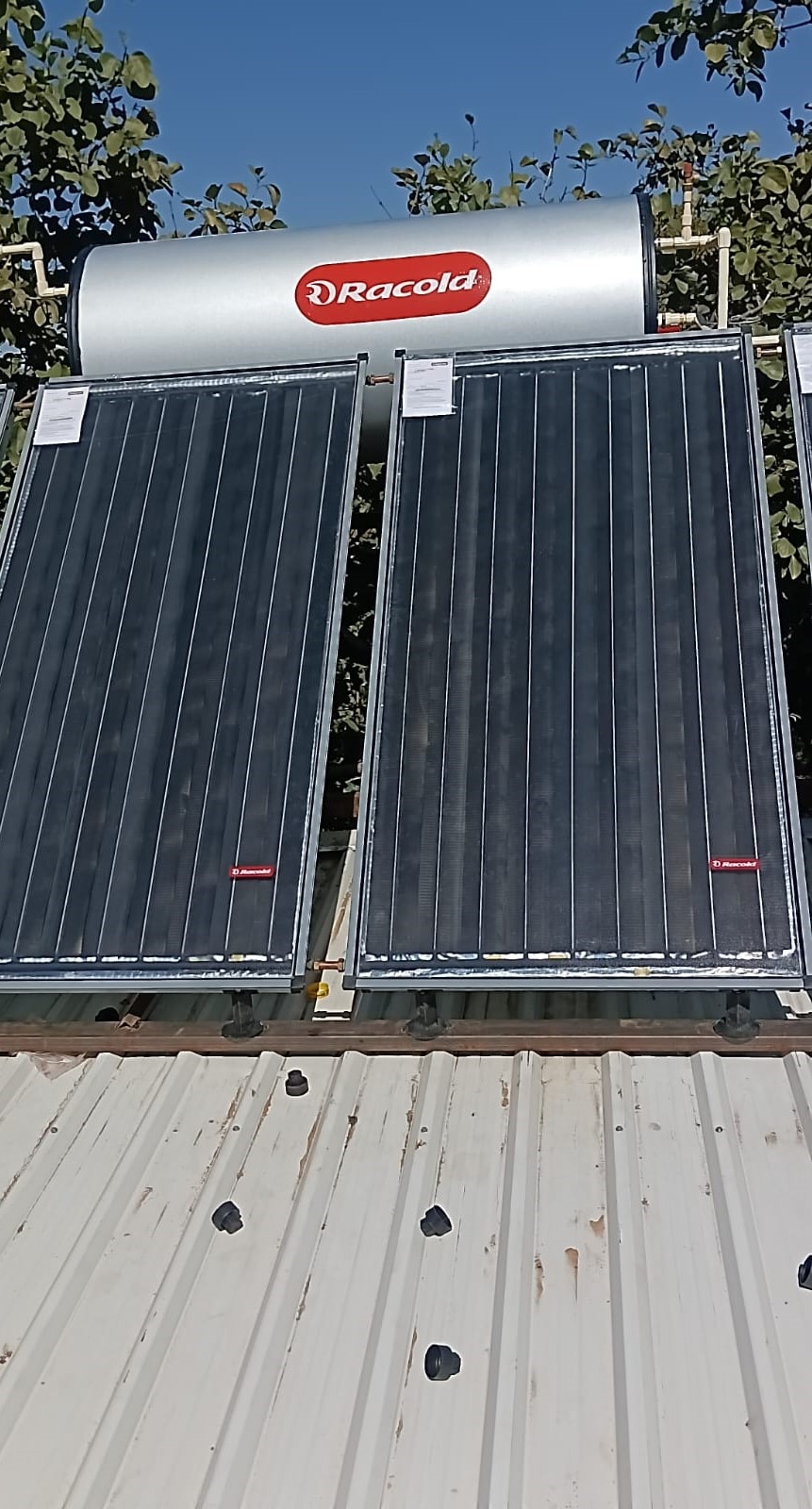 | Solar Water Heater Racold 300LPD FPC Solar Water Heater ₹105499 Product Description The Racold 300LPD FPC (Flat Plate Collector) Solar Water Heater is a premium solar hot water system designed to deliver reliable,... View product → |
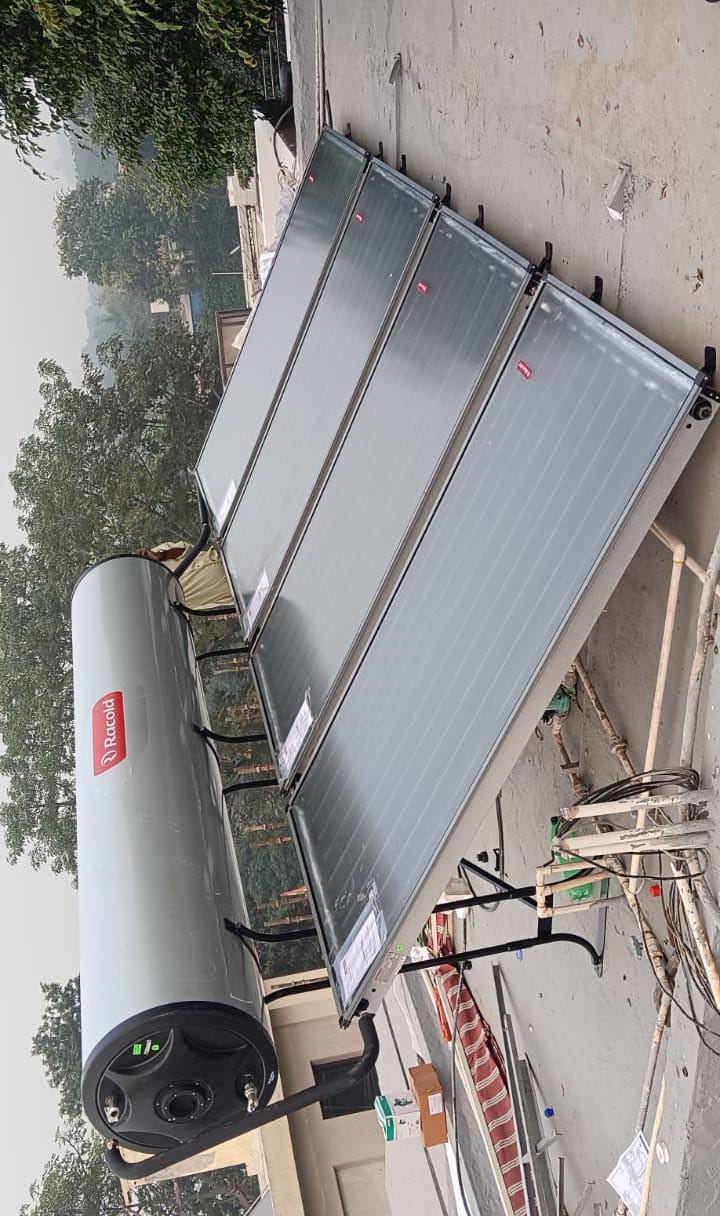 | Solar Water Heater Racold 500LPD FPC Solar Water Heater ₹122500 Product Description The Racold 500LPD FPC (Flat Plate Collector) Solar Water Heater is a high-capacity hot water solution designed for commercial and... View product → |
Choose on delivered hot-water cost, serviceability and backup risk
Delivered cost, not purchase price, decides whether the system remains dependable. Include electricity for backup heating and circulation pumps, collector and tank replacement, descaling, water treatment, sacrificial-anode replacement, leakage repairs, AMC response time, and roof or structural work.
| Option | Delivered-cost drivers | Dependability test |
|---|---|---|
| Solar with electric backup | Low routine electricity; higher exposure to collector, tank, pump and winter-backup costs | Confirm usable peak-hour delivery, not just annual solar fraction |
| Heat pump with electric backup | Electricity for compressor and element; service, refrigerant and scale-control costs | Check night recovery, low-ambient output, noise and connected load |
| Solar preheat plus heat pump | Solar reduces heat-pump work; two systems add controls and maintenance points | Verify that either source can provide a defined emergency operating mode |
A 500 L tank stores about 17.4 kWh when heated from 30°C to 60°C; it does not promise 500 L of hot water every day. Collector yield, morning draw-off, winter mains temperature and backup recovery determine actual delivery.
Require the same load case in every commercial solar water heater comparison. Ask for annual electricity use, solar contribution, peak usable delivery, roof area, maintenance intervals, five- to ten-year replacement assumptions and AMC response time.
Include isolation valves, drain points, gauges, non-return valves, mixing valves and bypasses so one failed pump or sensor does not shut the hostel.
For a racold solar or heat pump water heater hostel in delhi, price winter backup capacity separately. A hybrid earns its place when cloudy mornings, night use or repair downtime make solar-only riskier than its lower running cost.
Frequently asked questions
How do you size a hostel hot-water system in Delhi?
Count occupants, measure litres of mixed shower water at 40–45°C, identify peak bathing demand, and add kitchen and laundry loads before selecting storage and recovery capacity.
Which performs better in Delhi: solar or a heat pump?
Solar reduces daytime electricity use but depends on roof exposure and winter sunshine. A heat pump provides controlled recovery across seasons but consumes electricity and needs dependable backup.
What should a hostel specify for the roof, plant room and pipework?
Specify structural roof capacity, service access, insulated hot-water and return pipes, drain points, isolation valves, temperature controls, pressure relief and anti-scald protection.
How should you compare a 500 L system with a larger hostel plant?
Use the same occupancy, mixed-water temperature, peak bathing window, inlet-water temperature and backup assumption, then compare delivered hot-water cost, recovery time, service access and outage risk.
Related products
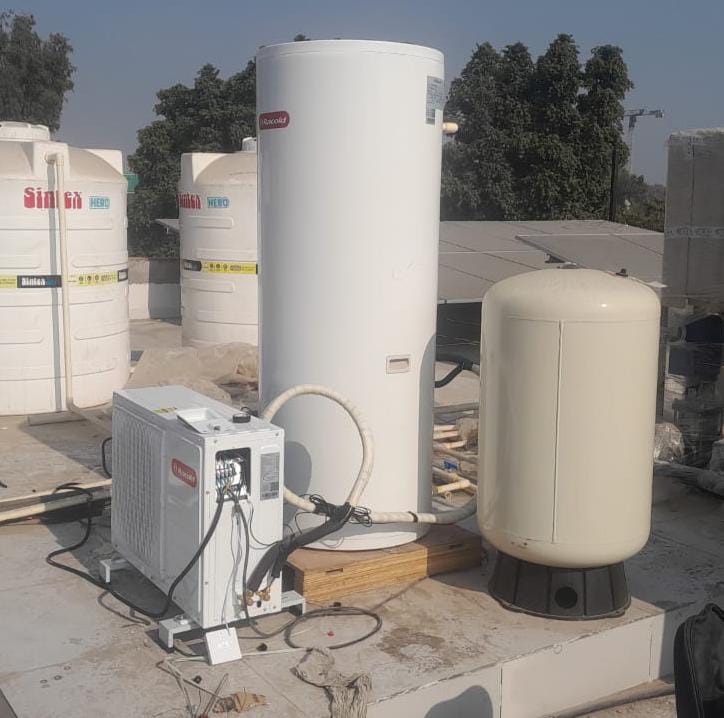 | Water Heater Racold 200LPD Heat Pump Water Heater ₹120500 The Racold 200 LPD Heat Pump Water Heater is a premium energy-efficient water heating solution designed for homes, villas, apartments, hotels,... View product → |
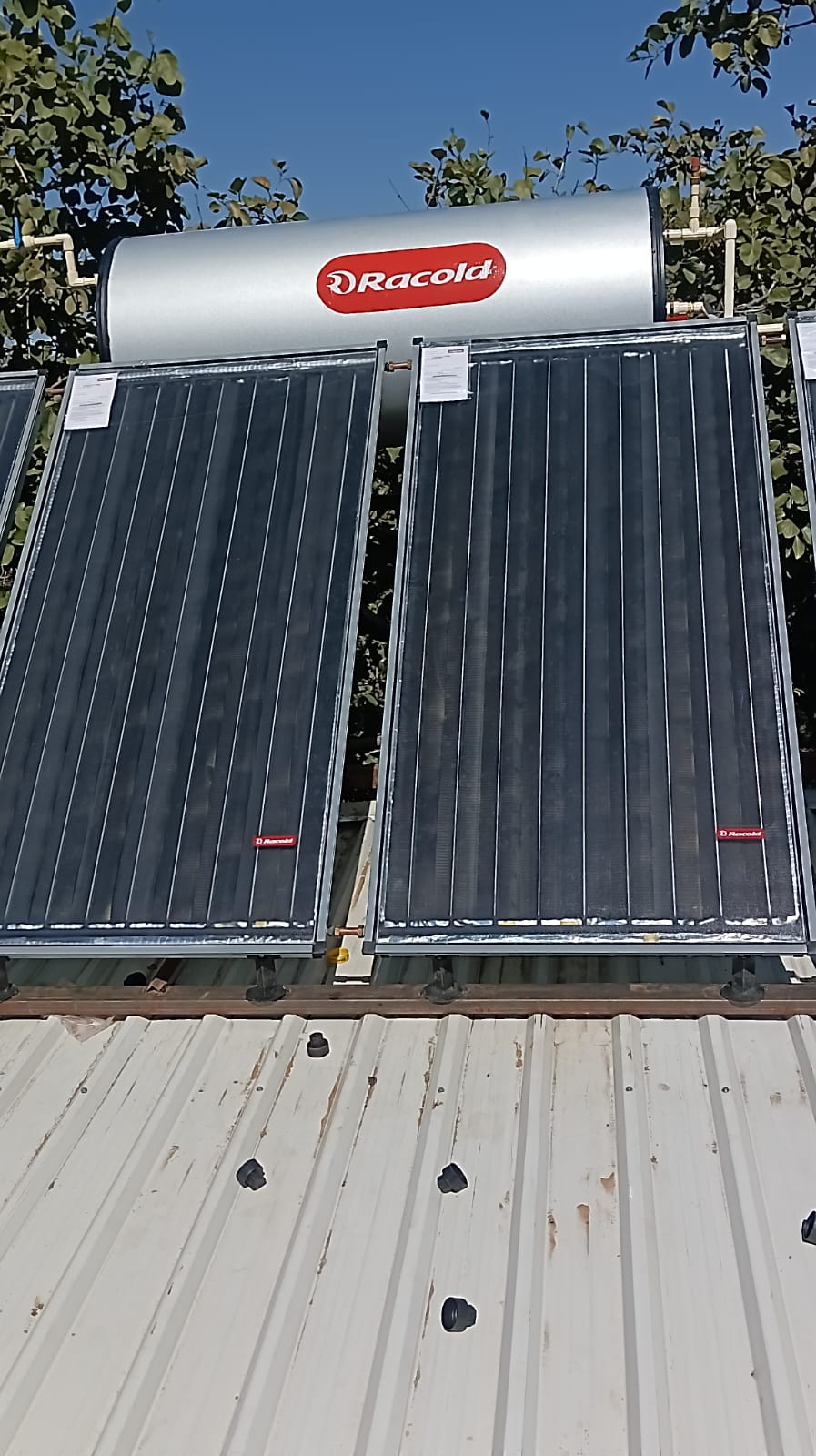 | Solar Water Heater Racold 200LPD FPC Solar Water Heater ₹75399 Product Description The Racold 200LPD FPC (Flat Plate Collector) Solar Water Heater is a reliable and energy-efficient hot water solution designed... View product → |
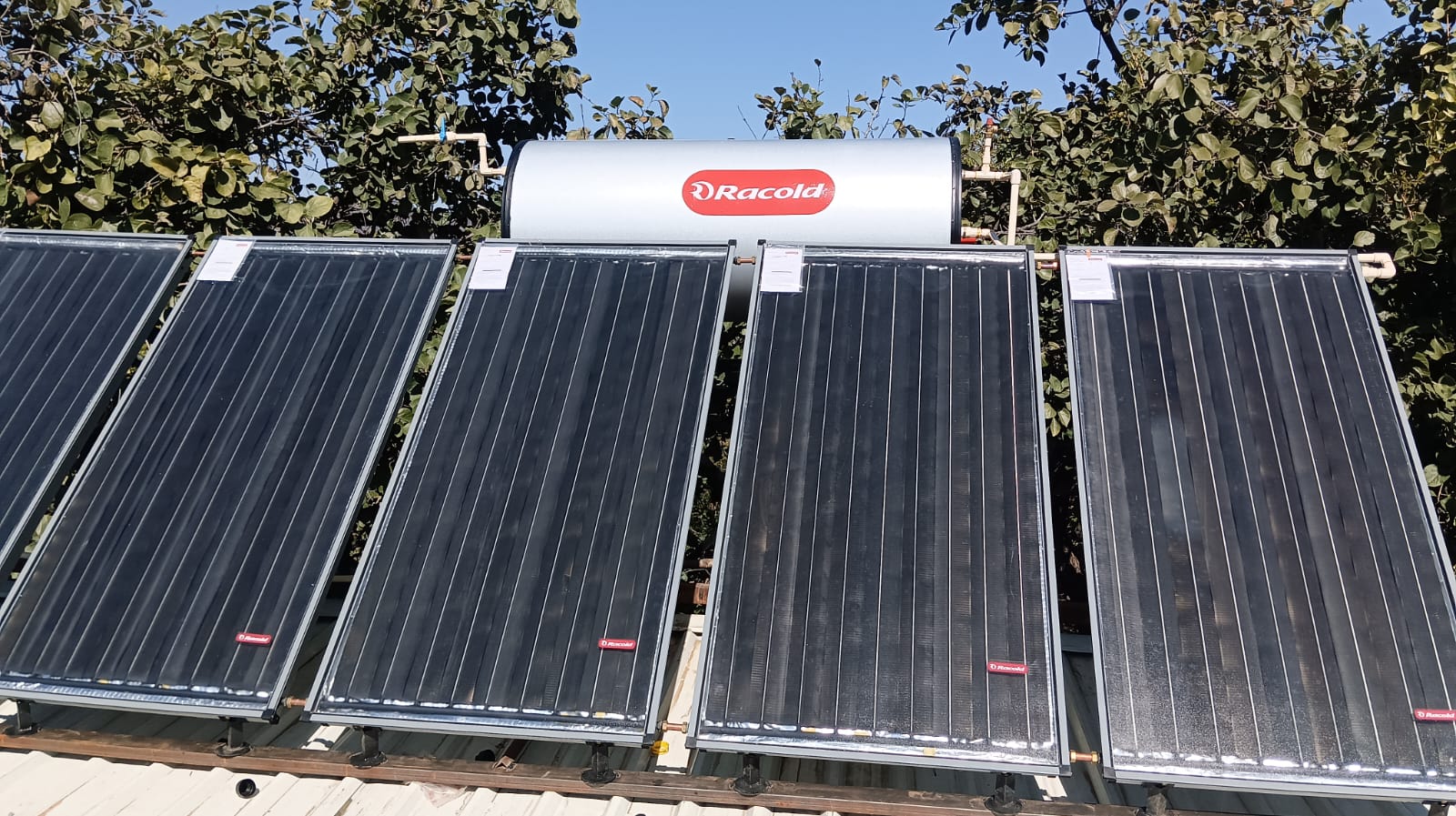 | Solar Water Heater Racold 500LPD Solar Water Heater ₹117480 Racold 500LPD Solar Water Heater The Racold 500LPD Solar Water Heater is a high-capacity hot water solution designed for commercial and large... View product → |
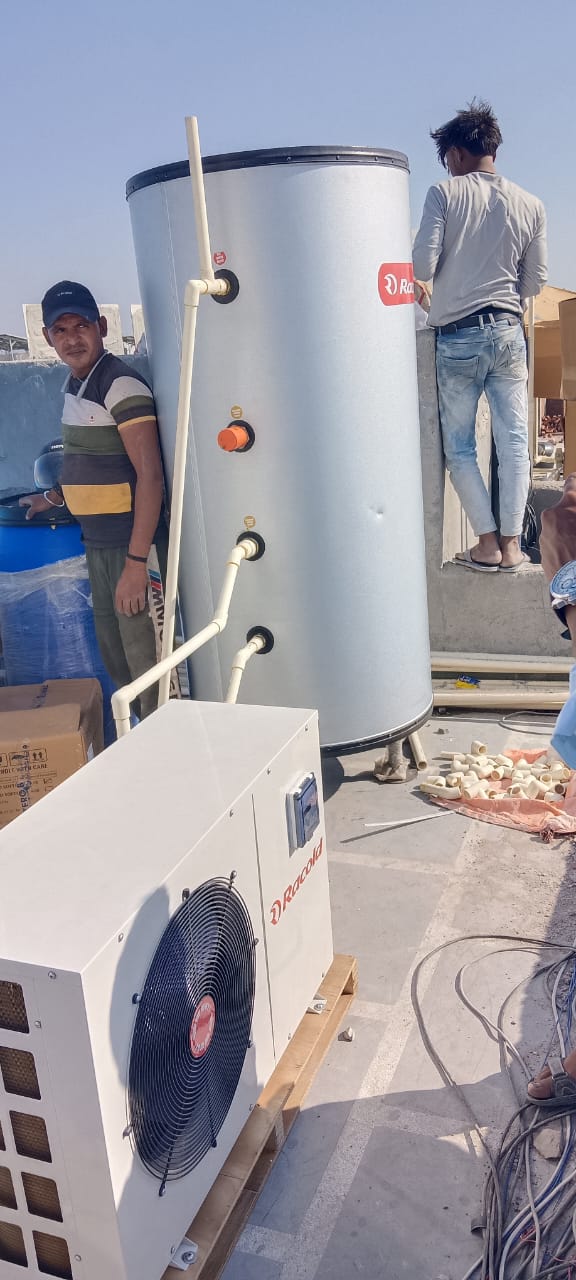 | Electric Water Heater Racold 500LPD Heat Pump Water Heater ₹235047 Racold 500 LPD Heat Pump Water Heater The Racold 500 LPD Heat Pump Water Heater is a high-capacity, energy-efficient hot water solution designed for... View product → |
Keywords