Lukewarm water does not prove that the FPC collector has failed: the fault may be a mixing valve, cold-water crossover, air lock, blocked circulation path or winter heat loss. By checking temperatures at three points and following a safe sequence of flow, valve, shading and backup-heater tests, you can separate a delivery problem from a genuine collector or tank fault.
Key takeaways
- Measure temperature at the tank and tap during the same draw.
- Check insulation, mixing valves, shadows, orientation and collector cleanliness.
- Compare inlet, outlet and tank readings to identify circulation faults.
- Call a technician for leaks, pressure loss, damaged collectors or persistent low heat.
Is the water actually cold, or is the heat being lost at the outlet?
Confirm the fault at two points: measure the water leaving the storage tank, then measure it at the shower or tap during the same draw.
A cool shower alone does not prove V-Guard FPC solar water heater temperature problems in Delhi; a thermostatic mixing valve, cold-water crossover, partly open bypass or faulty single-lever mixer can cool water after it leaves the tank.
Use a thermometer suitable for hot water, run the outlet briefly until the reading settles, and compare both readings at the same time. Keep your hands away from scalding water and do not open electrical covers.
- Hot at the tank, cool at the shower: inspect the mixing valve, mixer cartridge, cold-water crossover, bypass and hot-water pipe for leakage or incorrect connection.
- Cool at both points after a clear, useful-sunshine day: investigate solar input, circulation, tank condition or backup heating rather than blaming the shower.
- Hot early, then quickly cool: compare the volume used with the tank’s rated storage; repeated large draws, an always-running hot-water loop or use before solar recovery can exhaust stored heat.
- Cool only in the morning or after foggy weather: record the date, sky condition, shading, first-draw time and approximate volume used before judging the collector.
A tank-outlet reading that remains low across comparable sunny days is evidence of a heating or storage problem. A large drop between tank and shower points to pipework or controls, not an FPC collector failure.
What should you check before calling a technician?
Start with water flow, valve position and visible leaks; do not open a pressurised circuit or remove a relief valve. This v guard fpc solar heater troubleshooting check can separate a plumbing fault from a collector fault without dismantling anything.
- Confirm the cold-water supply is open and the hot tap produces a steady stream. Sputtering or weak flow points to low tank level, an air-lock or a supply restriction.
- Inspect the cold inlet, hot outlet, overflow or vent, drain, isolation valves and non-return valve. Look for drips, damp insulation, a partly closed handle, wrong flow direction or a hot-to-cold cross-connection.
- Trace the pipes visually. A downward loop or trapped high point between collector and tank can stop thermosiphon circulation.
- After sustained sunshine, measure collector-inlet, collector-outlet and tank temperatures with a contact thermometer. A hot collector and cool tank indicates blocked circulation, an air-lock, incorrect valves, reverse flow or a connection error.
- Check the tank overflow or vent for discharge and confirm hot-water flow returns after opening the supply. Do not remove fittings to prove the tank level.
- At the electrical backup heater, check only the isolator, breaker and indicator light. Switch off power before reporting a tripped breaker; do not open the heater cover.
| Fault sign | Likely area | Safe interpretation |
|---|---|---|
| Hot collector, cool tank | Circulation or valve | Check air, pipe rise and valve position |
| Hot evening, cold morning | Non-return valve | Suspect reverse thermosiphoning |
| No hot flow, damp pipe | Leak or tank supply | Isolate water and call a technician |
| Backup indicator off | Electrical backup | Check isolator and breaker only |
Why does Delhi weather and rooftop layout reduce FPC temperature?
Delhi winter can reduce an FPC collector’s useful heat without the collector being defective. Fog, haze, low sun and cold morning conditions shorten the period in which the panel gains more heat than the water loses, so a solar water heater low temperature in Delhi is not proof of failure.
- Fog and haze scatter sunlight, especially during early hours. The collector may receive weak radiation until late morning, leaving less time to heat the tank.
- Dust on the glass reduces sunlight reaching the absorber. A thin film can matter after several dry, windy days; wash the surface only when it is cool and follow the manufacturer’s cleaning instructions.
- Roof shading from a water tank, parapet, building or overhead structure can cover part of the collector. Shade during late morning or midday removes the strongest heating period.
- A collector facing south receives the best daily exposure in Delhi. East- or west-facing installation shifts or shortens heating, while a nearby obstruction can make the practical orientation worse.
- The tilt must suit the roof and seasonal sun path. A panel laid too flat or steep loses useful winter exposure and may circulate less effectively.
- Winter daylight and effective sunshine are shorter than in summer. Heavy evening use can therefore empty the stored heat faster than the next day restores it.
- Exposed hot-water pipes lose heat to cold air, particularly across the roof and during long runs. Missing or damaged insulation can make the tank hot but the outlet lukewarm.
Compare results on clear and foggy days at similar usage. A persistent low tank temperature in strong midday sun points beyond weather.
How can temperature readings separate a collector fault from a circulation fault?
Compare collector-inlet, collector-outlet and tank temperatures after sustained sunshine, not immediately after switching on a tap. An fpc solar water heater not heating may have a healthy collector whose heat is trapped by an air-lock, closed valve, blocked pipe or weak thermosiphon flow.
| Reading pattern | What it reveals | Likely cause |
|---|---|---|
| Cool inlet, hot outlet, cool tank | Heat reaches the collector but not storage | Air-lock, scale-restricted riser, valve error, leak or connection fault |
| Cool inlet, barely warmer outlet, cool tank | The collector is not gaining useful heat | Shading, heavy dust, failed or damaged glazing, absorber fault or insufficient sun |
| Warm tank at dawn, then rapid overnight cooling | Heat is moving backwards from storage | Reverse thermosiphoning from incorrect pipe falls, missing check valve or faulty valve |
| Cool tank after heavy use, rising outlet and tank temperatures in sunshine | The system is recovering normally | High demand rather than a collector failure |
Carbonate scale can narrow collector passages and reduce water-side heat transfer, so a very hot outlet with poor tank recovery supports a circulation restriction rather than proving good performance. A cracked or permanently fogged cover, damaged glazing, or a persistently low collector-outlet temperature under strong sun deserves collector inspection.
Record readings before use, after the first draw and after several hours of sun. If the tank outlet is hot but the shower is lukewarm, investigate a mixing valve or cold-water crossover instead of the collector.
When is the fault serious enough for professional diagnosis?
Call a technician when low temperature persists after safe valve, leak, flow and outlet comparisons, or when a safety, electrical or pressurised component is involved. Record the evidence before anyone changes the system:
- Date, time, sunshine, fog, dust and any roof shading
- First-draw time, tank-outlet temperature and tap or shower temperature
- Approximate hot-water volume used and whether backup heating was enabled
- Collector-inlet, collector-outlet and tank temperatures after sustained sunshine
- Valve positions, leaks, unusual discharge and whether the complaint follows heavy use
For v guard fpc solar heater troubleshooting, do not open a pressurised circuit, remove a relief valve, alter a non-return valve or work on backup-heater wiring yourself. A technician should handle air-lock removal on sealed systems, circulation repairs, electrical testing, mixer or thermostatic-valve replacement, pipe reconnection, tank leaks and collector removal.
The readings help prevent an unnecessary collector replacement:
| Pattern | Likely direction | What to verify |
|---|---|---|
| Hot collector, cool tank | Circulation fault | Air lock, blocked pipe, valve position or reverse flow |
| Hot tank, lukewarm tap | Outlet or plumbing fault | Mixer, cold crossover, bypass or leaking hot line |
| Both temperatures acceptable, supply exhausted | Sizing or demand issue | Tank volume, draw timing and continuously running loops |
Give this log to RISE N SHINE or another qualified service team and ask for a sizing, plumbing and controls diagnosis before approving a new collector. A correctly working collector cannot compensate for an undersized tank or uncontrolled demand.
Related products
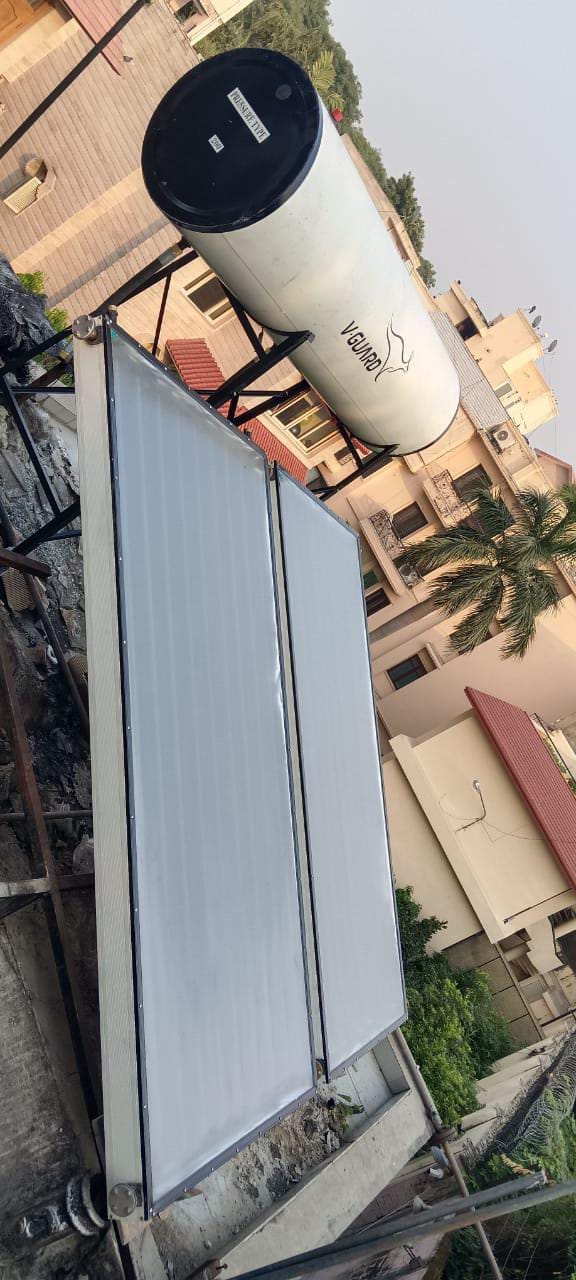 | Solar Water Heater V- Guard 100LPD FPC Solar Water Heater ₹50000 V-Guard 100 LPD FPC Solar Water Heater with Glass Line Tank is an efficient and durable hot water solution designed for small families of 2–3... View product → |
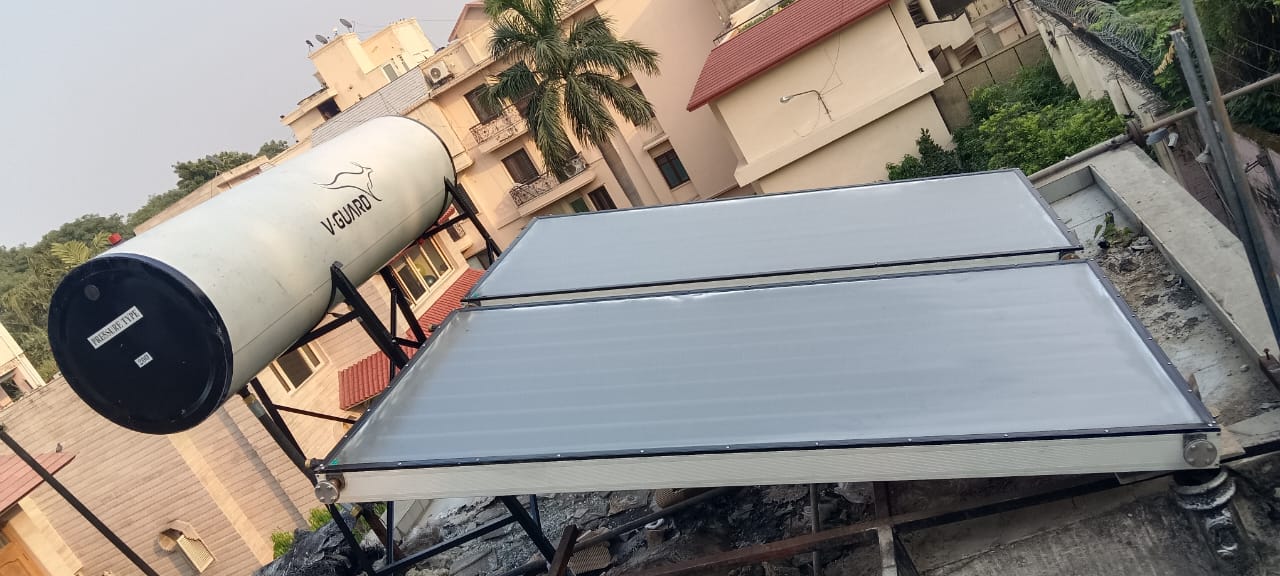 | Solar Water Heater V- Guard 300LPD FPC Solar Water Heater description ₹107500 V-Guard 300 LPD FPC Solar Water Heater The V-Guard 300 LPD FPC (Flat Plate Collector) Solar Water Heater is a premium solar hot water system designed... View product → |
Frequently asked questions
How can you tell whether water is cold or losing heat at the outlet?
Measure water leaving the storage tank and water reaching the shower or tap during the same draw. A large temperature drop points to outlet-side heat loss rather than a collector fault.
What should you check before calling a technician for an FPC solar heater?
Check the tank and pipe insulation, mixing valve setting, visible leaks, collector cleanliness, rooftop shade, collector orientation and whether hot water reaches the outlet.
Why can Delhi weather and rooftop layout reduce FPC solar heater temperature?
Winter fog, haze, cold ambient air, rooftop shading and poor collector orientation reduce solar gain. Long or poorly insulated pipes also cool water before use.
How do temperature readings separate a collector fault from a circulation fault?
Compare collector outlet, tank and tap temperatures. A hot collector with a cool tank suggests circulation trouble; a cool collector and cool tank points to low solar gain or a collector problem.
Related products
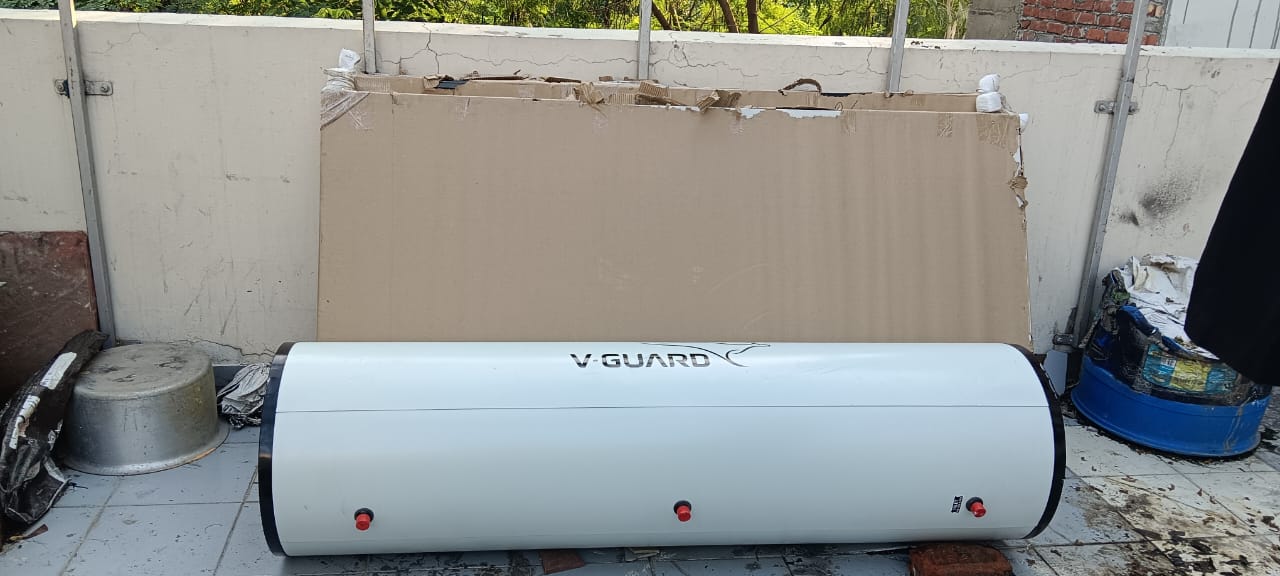 | V- Guard 500LPD FPC Solar Water Heater ₹143300 V-Guard 500 LPD FPC Solar Water Heater – Product Description The V-Guard 500 LPD FPC (Flat Plate Collector) Solar Water Heater is a high-capacity... View product → |
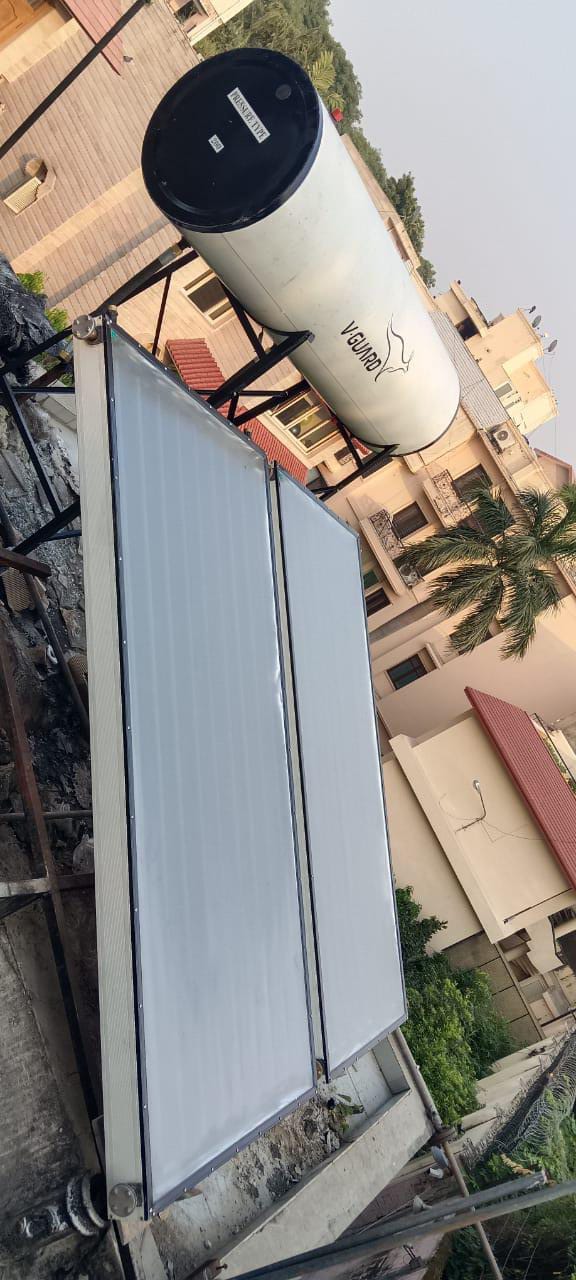 | V- Guard 200LPD FPC Solar Water Heater ₹85000 V-Guard 200 LPD FPC Solar Water Heater The V-Guard 200 LPD FPC (Flat Plate Collector) Solar Water Heater is a high-performance solar water heating... View product → |
Keywords