A 200 LPD tank is not automatically the right choice for a Delhi villa: daily usage, simultaneous bathroom demand, winter sunlight and roof capacity all affect the decision. By comparing the four sizes and checking the installation details that product listings omit, you can choose a system that delivers usable hot water without paying for unnecessary capacity.
Key takeaways
- LPD is a daily rating, not guaranteed hot water at every hour.
- Size the system from simultaneous users, showers and backup-heating needs.
- Check roof area, shadow, tank placement and winter performance before ordering.
- Require a written specification, installation scope and commissioning test from the supplier.
What 100, 200, 300 and 500 LPD actually mean
LPD means litres per day, not a promise that the tank will supply that volume at any hour. The rating is nominal and measured under test conditions; Delhi fog, cold inlet water, pipe losses, draw-off timing and backup heating change the usable result.
For v guard tru hot etc for solar water heater sizes in delhi, compare occupancy and simultaneous demand, not the label alone.
| Size | Practical planning range | Typical Delhi-home use |
|---|---|---|
| 100 LPD | 3–4 regular users | Small family, limited bucket use, one bathroom |
| 200 LPD | 6–8 regular users | Normal family house with one or two bathrooms |
| 300 LPD | 9–12 regular users | Large family, guest rooms or parallel bathroom use |
| 500 LPD | 16–20 regular users | Large villa, staff accommodation or frequent guests |
These ranges use roughly 25–30 litres of hot water per person per day. Showers, bathtubs and servants’ quarters push demand upward, while careful bucket use reduces it.
A 300 LPD system does not mean 300 litres will arrive hot during a winter-morning rush. Two or three bathrooms drawing together can exhaust stored hot water through narrow, unbalanced pipework.
The 500 LPD option also needs more collector area, roof support and insulated distribution piping; increasing tank volume alone cannot fix weak solar gain or slow recovery.
How to size a Tru Hot ETC system for your household
Start with 25–30 litres of hot water per person per day, then test that estimate against peak use rather than choosing by resident count alone.
| Option | Planning fit | Choose it when |
|---|---|---|
| 200 LPD | About 6–8 regular users | One family uses showers and buckets in staggered periods |
| 300 LPD | About 9–12 regular users | Several bathrooms operate together, or guests and staff add demand |
1. Count regular residents, servants’ quarters and guest-room users. A 200 LPD Tru Hot ETC solar water heater for homes suits a normal family house; move toward 300 LPD when occupancy reaches the upper end of the range or visitors arrive frequently.
2. Record how people use water. Showers consume hot water faster than bucket bathing, while long showers, bathtubs and morning routines create sharp peaks. Two bathrooms drawing simultaneously is a stronger reason for 300 LPD than one extra resident.
3. Check the distribution system, not just the tank. Narrow, uninsulated or poorly balanced hot-water pipes can leave one bathroom cold while another draws water, even with 300 LPD installed. Ask for insulated lines and short routes.
A 300 LPD tank does not guarantee 300 litres at the required temperature on a foggy Delhi morning. Solar radiation, inlet temperature, pipe losses and backup heating determine actual availability; oversizing also adds roof load and collector space.
The physical and technical specifications to compare before ordering
Ask for a dimensioned drawing and a filled-weight calculation before ordering a V Guard 200 LPD Tru Hot ETC solar water heater in Delhi. The quotation must identify the complete collector-and-tank assembly, not just its nominal capacity.
| Specification | 200 LPD quotation | 300 LPD quotation |
|---|---|---|
| Overall dimensions | Length, width and height of tank, frame and tubes | Same measurements, with the larger collector stated |
| Roof footprint | Collector footprint, service clearance and access route | Collector footprint, clearance and roof-loading requirement |
| Collector details | Evacuated-tube count and gross collector area in square metres | Evacuated-tube count and gross collector area in square metres |
| Weight | Empty and filled weight, including frame and water | Empty and filled weight, including frame and water |
| Tank construction | Insulation material and thickness, lining, supports and tank height | Insulation material and thickness, lining, supports and tank height |
| Hydraulics | Pipe sizes, inlet and outlet locations, drain, vent and hot-water connections | The same details, sized for the larger flow demand |
| Pressure | Pressurised or non-pressurised arrangement, tank working pressure and maximum inlet pressure | The same ratings, including booster-pump compatibility |
| Backup heating | Heater wattage, element position, thermostat, control and dry-run protection | Heater wattage, element position, thermostat, control and dry-run protection |
Also require the price to name the pressure-reducing valve, expansion provision, mixing valve and check valve included. Do not connect a high-pressure supply directly unless the complete assembly is rated for it. Ask for safety-valve discharge routing and confirmation that backup heating cannot energise without adequate water coverage.
Will your Delhi roof and winter conditions support the chosen size?
A 300 LPD collector needs an unshaded, structurally sound roof; extra tank volume cannot compensate for poor winter exposure.
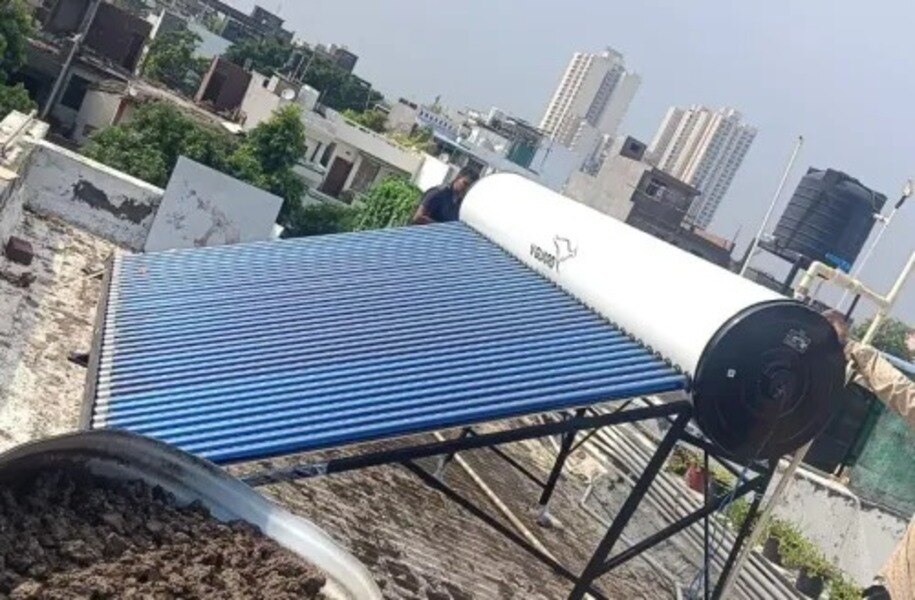
For a V-Guard 300 LPD Tru Hot ETC solar water heater in Delhi, face the evacuated tubes toward the equator, normally south, and keep nearby walls, parapets and water tanks from casting shade during roughly 9 a.m. to 3 p.m. Winter’s lower sun angle makes a summer-clear roof perform poorly if shadows reach the tubes.
Check these installation constraints before comparing 200 LPD and 300 LPD:
- Confirm the roof can carry the filled tank, frame, tubes and wind restraint; the 300 LPD unit imposes more static load.
- Measure the staircase or hatch, roof route and service clearance before delivery.
- Allow space to wash dusty tubes and replace a broken evacuated glass tube without dismantling the array.
- Insist on insulated, short pipe runs; long exposed pipes lose heat before water reaches the bathroom.
- Test hard-water risk and specify a cleaning or descaling plan for scale in the tank, valves and plumbing.
- Protect exposed pipework against Delhi’s coldest nights; freezing water can split fittings even though evacuated tubes reduce heat loss.
- Include a mixing valve and correctly rated pressure controls where municipal pressure or a booster pump is present.
Fog, dust and winter radiation reduce daily output, so retain backup heating for cold mornings and summer stagnation control when demand falls.
200 LPD or 300 LPD for a Delhi villa: which trade-off is sensible?
200 LPD is the sensible choice for a Delhi villa with about 6–8 regular users, moderate showering, bucket use and limited simultaneous demand. It also reduces roof footprint, filled weight and installation cost.
Choose 300 LPD when 9–12 people use the house, guest rooms are occupied frequently, several bathrooms draw hot water together, or showers and a bathtub create sharp morning peaks.
| Option | Sensible fit | Trade-off |
|---|---|---|
| 200 LPD | 6–8 users; moderate daily demand; restricted roof space | Lower load and footprint, but less reserve during winter or guest stays |
| 300 LPD | 9–12 users; frequent guests; multiple simultaneous showers | More storage and reserve, but requires more collector area, roof support and service clearance |
LPD is a nominal daily rating, not a promise of that volume at the required temperature. Delhi fog, cold inlet water, pipe losses and draw-off timing reduce solar output, so specify the outlet temperature and recovery time supplied by electric, gas or heat-pump backup.
Pipework can decide whether the larger tank feels useful. Long, narrow or poorly insulated runs waste heat and weaken flow at the far bathroom; require correctly sized, insulated lines and a sensible return arrangement. A solar water heater supplier for villas in Delhi should also record tank-inlet pressure, remote-bathroom flow and backup operation during commissioning.
What to require from the supplier before commissioning
Require the supplier’s written scope before you compare V Guard Tru Hot ETC for solar water heater sizes in Delhi. A 200 LPD or 300 LPD label is not a guaranteed morning supply; specify outlet temperature, recovery time and backup operation.
| Check | Put in writing | Reject or clarify |
|---|---|---|
| Installation | Roof-load calculation, wind restraints, collector footprint, service clearance and staircase or hatch access | No site measurement |
| Pressure and safety | Pressurised or non-pressurised arrangement, tank working pressure, maximum inlet pressure, pressure-reducing valve, expansion provision, check valve, mixing valve and routed safety-valve discharge | Direct booster-pump connection without a rated assembly |
| Hard water | Tank lining or material, sacrificial anode, tube-end seals, cleaning access and scale-removal or part-replacement procedure | “Maintenance-free” with no component details |
| Commissioning | Tank-inlet pressure, inlet and outlet temperatures, remote-bathroom flow, leak test and proof that backup heating cannot energise without water coverage | LPD alone offered as acceptance evidence |
| Service | Warranty exclusions, response time, annual inspection, spare-part availability and named service contact | Verbal promises only |
Ask RISE N SHINE to attach these readings to the handover sheet for a Tru Hot ETC solar water heater for homes.
Related products
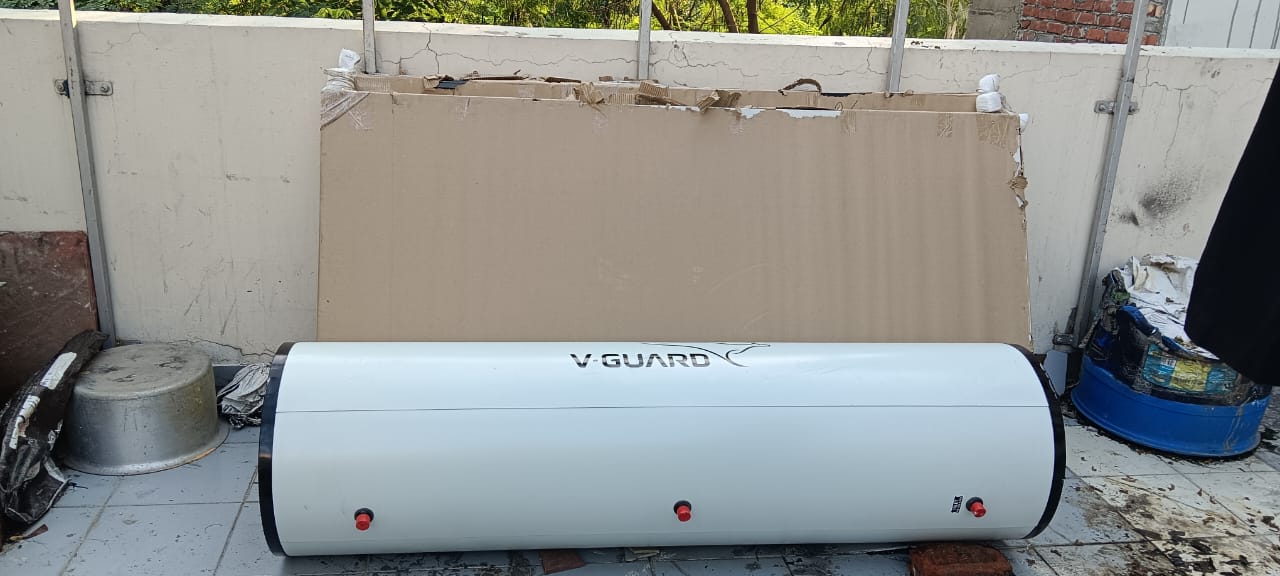 | Solar Water Heater V-Guard 300LPD Tru Hot ETC Solar Water Heater ₹55000 V-Guard 300LPD Tru Hot ETC Solar Water Heater The V-Guard 300LPD Tru Hot ETC Solar Water Heater is a high-capacity, energy-efficient solar water... View product → |
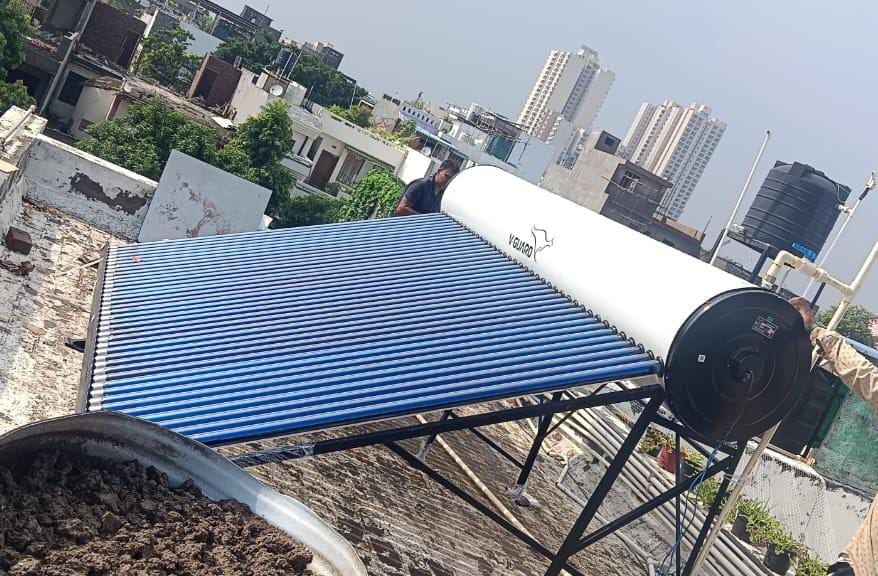 | Solar Water Heater V-Guard 200LPD Tru Hot ETC Solar Water Heater ₹40000 V-Guard 200LPD Tru Hot ETC Solar Water Heater The V-Guard 200LPD Tru Hot ETC Solar Water Heater is a high-performance and energy-efficient solar... View product → |
Frequently asked questions
What do 100, 200, 300 and 500 LPD mean in a Tru Hot ETC system?
LPD means litres per day. It is a nominal test rating, not a promise that the tank will deliver that volume at every hour. Delhi weather, cold inlet water, pipe losses and backup heating affect usable hot water.
How do you size a Tru Hot ETC solar water heater for a household?
Estimate daily hot-water use, count people using hot water at the same time, allow for shower and bathing patterns, and decide how much backup heating you need during foggy winter days. Compare those figures with the system’s stated LPD rating.
What should you compare before ordering a solar water heater?
Compare tank capacity, collector type and tube count, outer dimensions, roof load, insulation, inlet and outlet sizes, operating pressure, electric backup rating, warranty terms, replacement parts and installation scope.
Will a Delhi roof support the selected ETC system?
Check unshaded roof area, the mounting direction and tilt, access for maintenance, structural loading, tank placement, pipe-route length and winter shading from nearby buildings, parapets or trees.
Should a Delhi villa choose 200 LPD or 300 LPD?
Choose 200 LPD when daily demand is moderate and usage is spread across the day. Choose 300 LPD when more people shower in a short period, the villa has guest use or you want greater reserve during weak winter solar conditions. The larger system requires more roof space, structural capacity and installation budget.
Related products
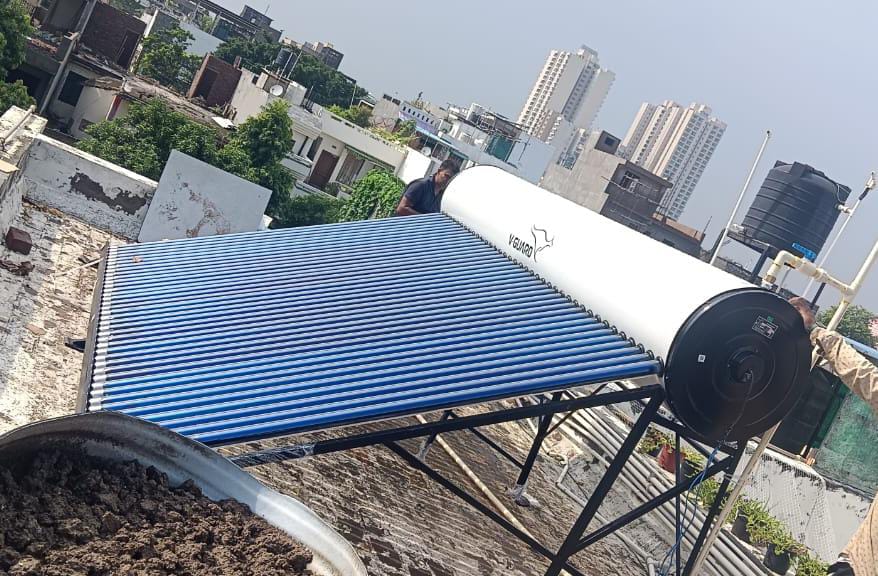 | Solar Water Heater V-Guard Tru Hot 100LPD Pro Solar Water Heater ₹25000 V-Guard 100LPD Tru Hot ETC Solar Water Heater – Product Description The V-Guard 100LPD Tru Hot ETC Solar Water Heater is an efficient and... View product → |
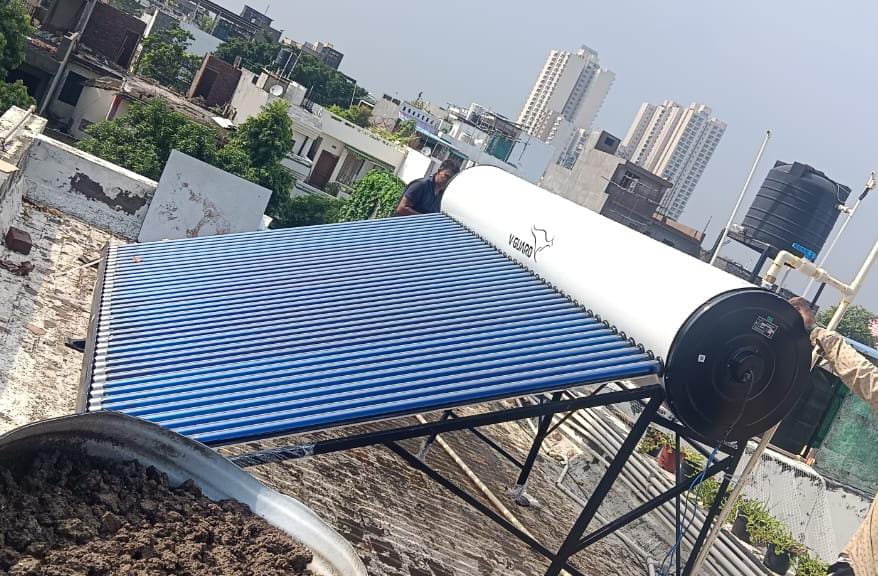 | Solar Water Heater V-Guard 500LPD ETC Tru Hot Solar Water Heater ₹97500 V-Guard 500LPD ETC Tru Hot Solar Water Heater The V-Guard 500LPD ETC Tru Hot Solar Water Heater is a high-capacity solar hot water solution designed... View product → |
Keywords