A 100LPD label does not tell you how many guests can shower during a Delhi checkout rush. You will be able to calculate usable hot-water capacity, test whether the roof and plumbing suit the installation, plan backup for winter and cloudy weather, and compare supplier quotations on an equal basis.
Key takeaways
- Model occupied rooms and peak morning demand before choosing one 100LPD unit.
- Add backup heating for winter mornings and cloudy periods.
- Confirm roof structure, shade, tank location, pipe routes, and drainage.
- Demand written performance, installation, warranty, and after-sales commitments.
Will one 100LPD unit cover a Delhi guest house?
One 100 LPD unit covers a Delhi guest house only when occupancy and peak demand are limited. Size a solar water heater for guest house use by modelling:
- Occupied rooms, guests per room and showers per guest.
- Shower flow rate, kitchen demand and the number of consecutive morning showers.
- Peak checkout demand, when several guests shower before leaving.
- Storage temperature, required delivery temperature and recovery time.
A 100 LPD rating means rated daily solar-heating output under specified test conditions, not a guaranteed 100-litre supply at every hour. A 100 LPD Pro solar water heater in Delhi can produce less useful heat during fog, cold inlet-water conditions or cloudy weather.
For example, 100 litres stored at 60°C, blended with 20°C inlet water to deliver 40°C water, produces about 200 litres before pipe and distribution losses. At 50°C storage, the same tank produces only about 150 litres at 40°C. The usable volume depends on temperature, not the label alone.
One unit suits limited occupancy, staff accommodation or one point load. A property with several bathrooms may need multiple 100 LPD units or a 200 LPD/300 LPD arrangement.
| Arrangement | Practical fit | Check before ordering |
|---|---|---|
| One 100 LPD | Limited occupancy or one bathroom cluster | Consecutive showers and kitchen use |
| Multiple 100 LPD | Several bathrooms | Peak checkout demand and pipe balancing |
| 200/300 LPD | Larger occupied load | Storage volume and recovery time |
Obtain winter recovery figures from the supplier; do not infer them from the capacity label.
How should you plan hot water for peak mornings and winter?
1. Publish a written morning schedule: assign shower slots by room, stagger consecutive showers, and tell guests at check-in when peak demand occurs. Staff should report unusually long showers, vacant rooms and the next day’s expected occupancy before switching from normal operation.
2. Use thermostatic mixing valves to deliver water at 45–50°C, while storing solar-heated water at the supplier’s specified higher range.
Require the supplier to state storage temperature range, outlet temperature, recovery time after consecutive showers and temperature at the farthest outlet; otherwise, this solar heater for guest house hot water has no reliable winter service basis.
3. Follow a simple operating procedure: enable solar charging during daylight, enable backup before the scheduled morning peak when storage or forecast recovery is inadequate, and run recirculation only during occupied periods or on a temperature-controlled cycle. Continuous recirculation gives faster taps but loses heat through pipes; heating only occupied periods uses less energy.
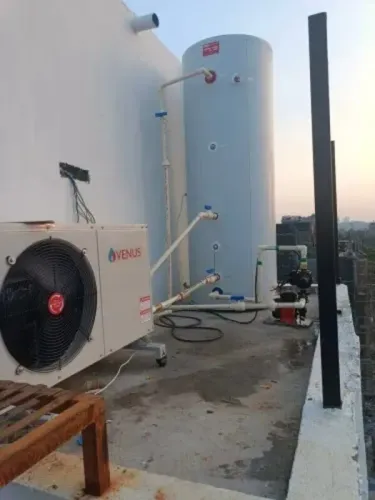
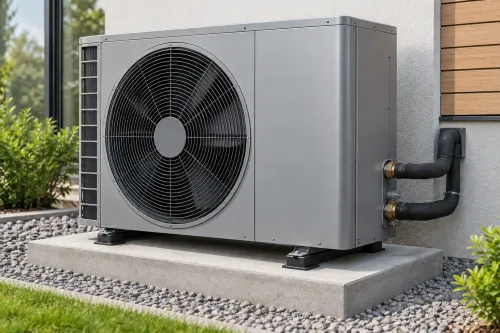
4. Compare backup options: an in-tank electric element is simple but adds scale exposure; an inline electric heater heats on demand; a separate heat pump reduces running energy but needs space and recovery time; an existing boiler may provide high recovery if its controls and capacity match.
5. Make the quotation identify backup capacity in kW, thermostat and cut-out settings, electrical protection, earthing, changeover logic and expected running cost. Delhi fog, shorter useful daylight, cold inlet water and overcast periods reduce solar recovery, so reject any solar-only promise without site-specific winter recovery data.
What must the roof and plumbing survey confirm?
Do not accept a quote for a v guard tru hot 100lpd pro solar water heater in delhi until the survey produces measurements, photographs and a marked roof-and-pipe plan.
Record these roof details:
- Shadow-free solar window, in hours, on 21 December and during the planned operating season; orientation in degrees, tilt angle and shading from parapets, water tanks, lift rooms and future construction.
- Collector and tank dimensions, weight and mounting points from the current datasheet; roof load capacity in kg/m², anchoring method and waterproofing detail.
- Safe maintenance route, working clearance, access for tube or tank replacement and the route length in metres for insulated hot-water pipes.
| Survey item | Open-vented arrangement | Pressurised arrangement |
|---|---|---|
| Inlet and static head | Measure inlet pressure and tank-to-shower head; confirm gravity flow | Measure supply pressure and confirm rated operating pressure |
| Safety hardware | Vent route, isolation valves, drain points and non-return valves | Non-return valves, pressure-relief device and expansion control |
| Distribution | Match shower plumbing to available gravity pressure | Match pipework, fittings and shower mixers to pressure rating |
Require flow and return pipe sizes, insulation thickness, isolation valves, drain points, recirculation pump and timer or temperature control. Identify backup-heater wiring, supply capacity and earthing. Test water hardness and TDS, then specify filtration or softening, sacrificial-anode service and scaling controls.
For multiple floors, compare gravity pressure with a pumped or pressurised design; never assume existing plumbing is compatible.
Is evacuated-tube technology the right choice for this property?
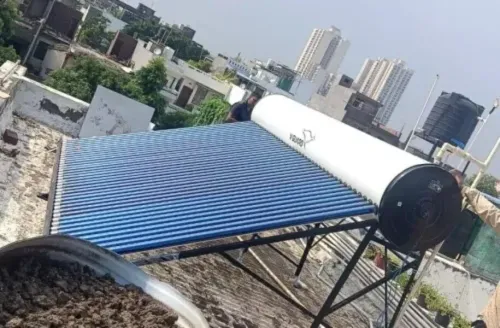
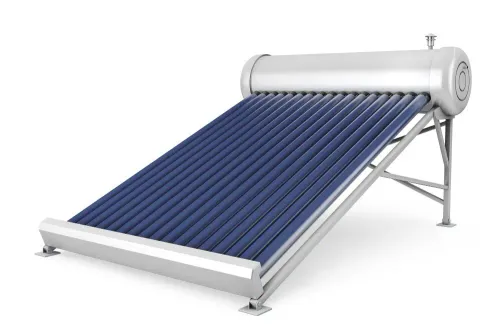
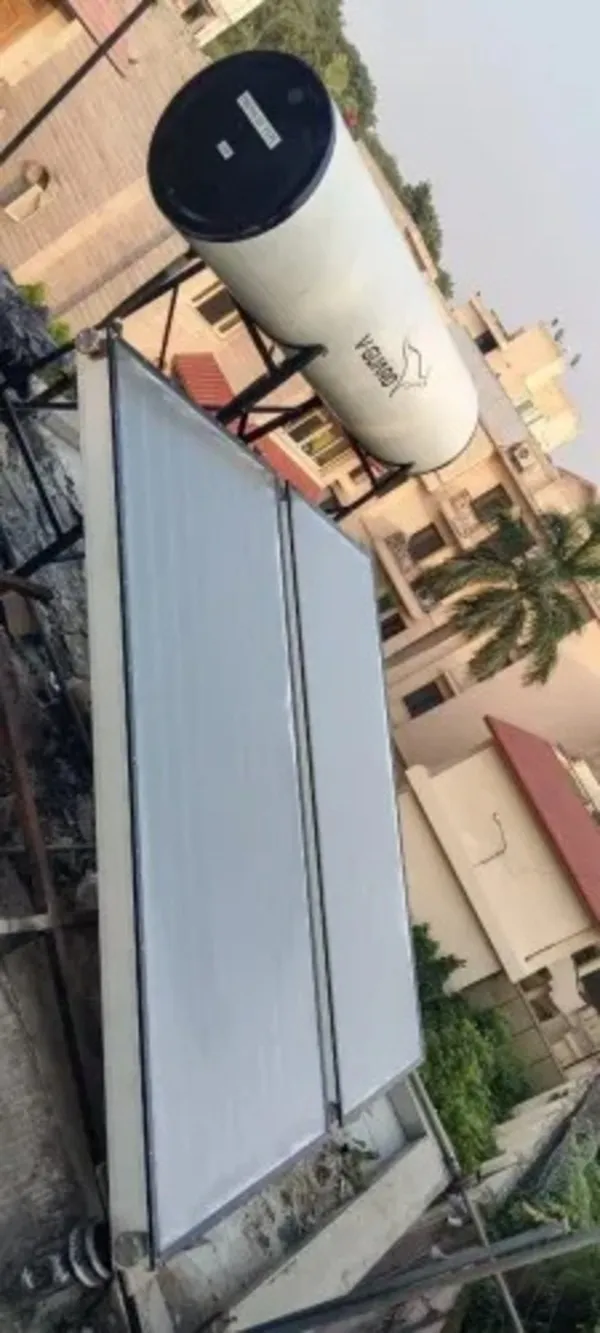
For a Delhi guest house, the V-Guard Tru Hot Pro ETC configuration is the better fit when winter collection and a small roof matter more than simple cleaning access. An FPC collector offers a broader, tougher surface, but needs more roof area and performs poorly when parapets, tanks or lift rooms shade it.
| Decision factor | ETC | FPC |
|---|---|---|
| Winter heat collection | Stronger in cold, diffuse sunlight | Better with clear, direct sun |
| Roof footprint | Smaller for similar output | Larger collector area |
| Shade sensitivity | One shaded tube reduces only part of collection | Partial shading affects the collector circuit |
| Cleaning access | Individual tubes are awkward to clean | Flat surface is easier to wash |
| Durability and hail | Glass tubes are vulnerable to impact | Robust panel, but hail can still damage glazing |
| Failure consequence | A broken tube needs safe isolation and replacement | A panel leak can disable a larger circuit |
Ask for these terms in the purchase order:
- Delhi/NCR stock of spare tubes, seals and end caps
- Replacement labour charge
- Isolation method for a damaged tube
- Confirmation that operation remains safe with one tube removed
Choose after checking roof shading, water hardness and TDS, pressure arrangement, service access and the required delivery schedule—not the product name alone. For a solar water heater for guest house use, lifecycle work includes scale removal, leak and insulation inspections, valve and relief-device checks, collector cleaning, backup-control testing and an unobstructed service route.
Minimise dead legs, flush unused bathroom branches and control recirculation. Solar storage does not replace a documented hygiene procedure for solar heater for guest house hot water.
What should a Delhi buyer demand from the supplier?
Request three quotations from a v guard tru hot pro supplier in delhi, all on a delivered-and-installed basis. Compare them only after each supplier prices the same scope; equipment-only figures conceal roof work, long pipe runs and electrical upgrades. RISE N SHINE belongs in the comparison only if it supplies this written scope.
- Demand the current exact model code and datasheet for the v guard tru hot 100lpd pro solar water heater in delhi, stating collector type, tank material, dimensions, operating pressure, weight, pipe sizes, backup-heater provision and replacement-part availability.
- Require separate warranty terms for the tank, tubes, electrical parts, valves, insulation and installation workmanship. Record exclusions for water quality, scaling, anode replacement, annual service, unauthorised installation and consequential damage.
- Before signing, obtain the service response area, spare-tube contact, replacement labour charge and a written winter backup plan.
| Quote item | Must appear in all three quotations |
|---|---|
| Delivered scope | GST, transport, roof structure and packaging removal |
| Hydraulic work | Stated piping length, insulation, valves and pump |
| Backup and handover | Backup heater, commissioning, operator training and manuals |
| After-sales cost | Annual maintenance, service intervals and spare parts |
At commissioning, witness operating-pressure leak testing, relief and non-return device operation, thermostat cut-out, earthing, farthest-outlet temperature and insulation quality. Collect signed test results, warranty documents, maintenance intervals and as-built pipe details; do not infer Delhi availability, authorised status, delivery time or service coverage from the product title.
Frequently asked questions
Will one 100LPD unit cover a Delhi guest house?
Only when the guest house has limited occupancy and peak demand. Compare occupied rooms, guest usage, staff requirements, and morning draw-off against the unit’s 100-litre daily rating.
How should you plan hot water for peak mornings and winter?
Calculate the litres needed during the busiest morning window, then account for colder winter conditions, cloudy days, recovery time, and backup heating before finalising capacity.
What must the roof and plumbing survey confirm?
Check roof load capacity, shadow-free solar exposure, tank access, collector orientation, pipe lengths, insulation, drainage, water pressure, and a safe route for maintenance.
Is evacuated-tube technology the right choice for this property?
Compare evacuated tubes with flat-plate collectors for Delhi’s winter performance, available roof area, shading, maintenance access, durability, and replacement requirements.
What should a Delhi buyer demand from the supplier?
Request a written sizing calculation, equipment specifications, installation scope, warranty terms, commissioning checks, service response process, spare-parts availability, and backup-heater details.
Keywords