Hard water contains dissolved calcium and magnesium. Although it may appear clear, it can leave deposits on taps, shower screens, tiles, heating elements, heat exchangers, pipelines, and sanitary fittings.
In hotels, hospitals, factories, apartment developments, and large homes, these deposits can increase cleaning requirements and reduce the efficiency of water-heating equipment. Choosing an automatic water softener supplier involves more than matching a unit to the daily water consumption.
Confirm That Hardness Is the Problem
White deposits are commonly associated with hard water, but treatment should not be selected on appearance alone. A water test should measure total hardness and may also examine iron, turbidity, total dissolved solids, pH, alkalinity, and other relevant parameters.
Softening primarily addresses calcium and magnesium hardness. It does not automatically remove all dissolved salts, microorganisms, odour, or every form of contamination.
Buyers should define whether the treated water is intended for:
- Central domestic supply
- Boiler feed
- Heat pump protection
- Laundry operations
- Hotel bathrooms
- Cooling systems
- Industrial washing
- Kitchen equipment
- Selected process applications
Understand How Automatic Softening Works
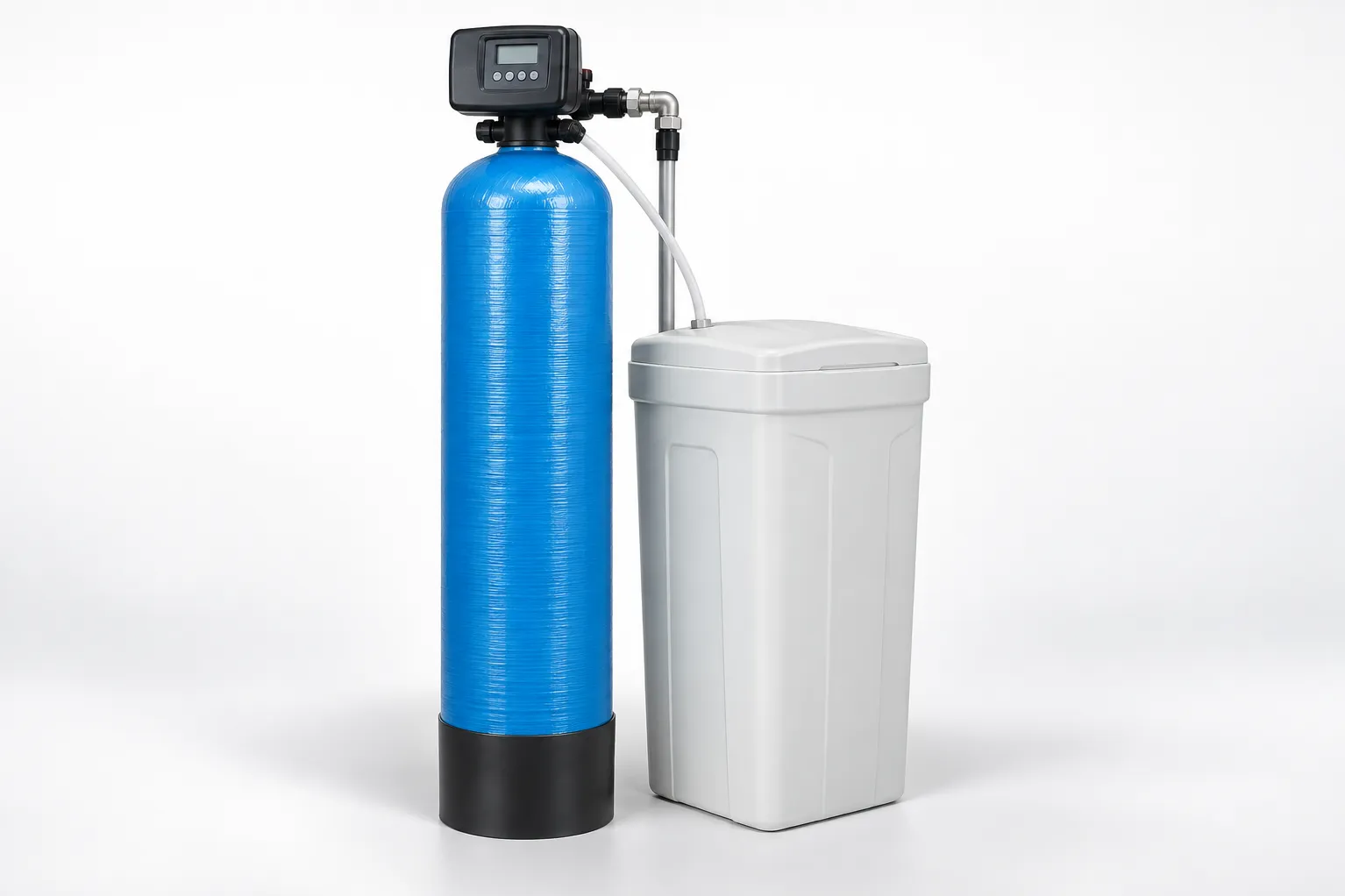
Most conventional automatic softeners use ion-exchange resin. Hardness minerals are exchanged for sodium ions as water passes through the resin bed.
Once the resin becomes exhausted, the control valve initiates regeneration using a brine solution. The system typically completes backwash, brine draw, slow rinse, fast rinse, and service-restoration stages automatically.
Automation reduces routine manual intervention, but salt replenishment, water testing, inspection, and maintenance remain necessary.
Size the System Using More Than Flow Rate
A softener must handle both peak flow and the total hardness load between regeneration cycles.
Selection should consider:
- Raw water hardness
- Daily water consumption
- Maximum flow rate
- Hours of operation
- Desired outlet hardness
- Resin quantity
- Regeneration frequency
- Available water pressure
- Drainage availability
- Space for the brine tank
A unit selected only by pipe diameter may regenerate too frequently or allow hardness leakage before the next cycle.
Compare Time-Based and Meter-Based Controls
Time-based valves regenerate at preset intervals, whether or not the full capacity has been used. Meter-based systems monitor treated water volume and initiate regeneration according to actual usage.
Properties with variable occupancy, such as hotels and banquet venues, may benefit from demand-based operation. The final selection should also account for peak-season consumption and reserve capacity.
Check Whether Pretreatment Is Needed
Suspended particles, iron, oil, chlorine, or other contaminants can affect resin performance. Depending on the water source, the softener may need upstream filtration or specialised treatment.
Buyers in Gurugram, Faridabad, Manesar, Panipat, and other parts of Haryana should arrange water testing because borewell and municipal water characteristics can differ even within the same city.
Examine Installation and Maintenance Requirements
A reliable softener installation should provide:
- Inlet and outlet isolation valves
- A bypass arrangement
- Adequate drain capacity
- Accessible salt filling
- Pressure gauges where appropriate
- Sampling points
- Protection against flooding
- Sufficient service clearance
Operators should know how often to check salt, test outlet hardness, inspect brine lines, and clean the brine tank.
Evaluate the Supplier’s Technical Readiness
Before selecting an automatic water softener supplier, ask for the raw-water basis of design, peak flow rating, resin volume, operating pressure, regeneration water consumption, salt consumption, valve specification, and expected outlet hardness.
The supplier should also explain what the system will not remove. Claims that one softener can resolve every water-quality problem should be treated cautiously.
RISE N SHINE provides water-treatment and hot water solutions for commercial and residential applications across Haryana and Delhi NCR. Integrating softening with heating-system planning can help protect tanks, heat exchangers, pipelines, and fixtures from avoidable scale formation.
A properly selected automatic water softener can reduce hardness-related maintenance and support more consistent equipment performance. Water analysis, accurate sizing, appropriate pretreatment, and routine outlet testing are the clearest indicators that a property is ready for successful installation.
Keywords